VMware: ESX Server-AD Integration


Although much of the administration of servers running VMware ESX Server 3.0 will occur in the Windows-based Virtual Infrastructure client connected to a VirtualCenter server, there are times when it is quicker or easier to perform an administrative task directly on the ESX Server itself—either via the command-line interface (CLI) or via the VI client authenticating directly against the ESX Server.  The problem with this is that, by default, administrators will have to use different credentials when connecting the VI client to ESX Server directly.  In addition, these credentials must be managed separately from Active Directory, and separately on each individual ESX Server.  As the number of ESX Servers in a farm grows, this can quickly become an administrative nightmare.

Read the complete article here: http://blog.scottlowe.org/

Whitepaper: Installing ESX 3.0.x without isolating the SAN


Do you find detaching SAN cables or organising LUN masking a hassle each time you build or rebuild a VMware ESX Server?  This paper shows you how to streamline the process by not loading HBA drivers during the initial installation process.

For any suggestions or corrections please contact Dinny at dinny.davies@googlemail.com

Download the whitepaper here: http://www.xtravirt.com/

Mocht je met deze whitepaper aan de slag gaan, lees dan heel erg goed. Dat bespaard je een hoop tijd 😉

Tool: Veeam Configurator


Veeam Configurator is a Windows application that handles multiple ESX Servers simultaneously. It reports on and allows you to configure the following subsystems:
– Remote root access
– Time synchronization (NTP)
– Patch level (reporting only in this version)
In addition, it allows you to:
– Perform diagnostics
– Run a custom script
on multiple ESX Servers (e.g. all servers in a cluster).

Download de tool hier: http://www.veeam.com/

VMWare: Three new patches


Patch ESX-1000073 for VMware ESX Server 3.0.1

Security Issues

This patch provides updates to the Kerberos network authentication packages provided in the VMware ESX Server Service Console. Possible vulnerabilities have been found with the krb5 telnet daemon, the Kerberos KDC, and kadmin. Although these features are not enabled in the Service Console by default, VMware recommends that all users apply this patch.

The Common Vulnerabilities and Exposures project (cve.mitre.org) assigned the names CVE-2007-0956, CVE-2007-0957, and CVE-2007-1216 to this issue.

Download the patch here: http://www.vmware.com/

Patch ESX-1000070 for VMware ESX Server 3.0.1

Resolved Issues

This patch provides the following:

  • This patch resolves time loss issue in Microsoft Windows 2000 SMP (multi-processor) virtual machines running applications that use the Windows Multimedia Timer service. Java applications typically fall into the category of applications that experience the time loss without this patch. The fix does not affect single-processor virtual machines.
  • A fix for an issue where using the 32-bit version of VMware tools in a 64-bit Solaris 10 virtual machine causes high CPU usage. Users of this patch on ESX Server hosts with Solaris 10 virtual machines with 64-bit VMware tools will still experience an error stating “vmware-toolbox-gtk: 1816): Gtk-WARNING **” since no 64-bit GTK is available, but will not experience the high CPU usage. Please refer to http://bugs.sun.com/bugdatabase/view_bug.do?bug_id=6456279 for more information on Solaris 10 and the GTK for 64-bit applications.
  • Pre-built modules (PBMs) to enable VMware tools to be installed in Red Hat Enterprise Linux (RHEL) 3 AS 64-bit virtual machines. Without this patch, the error “None of the pre-built vmmemctl modules for VMwaretools are suitable for your running kernel.” is seen when attmempting to install VMware tools in RHEL 3 AS 64-bit virtual machines.
  • Pre-built modules (PBMs) to enable VMware tools to be installed in Suse Linux Enterprise Server (SLES) 8 Kernel v2.4.21-306 and higher virtual machines.

Download the patch here: http://www.vmware.com/

Patch ESX-1000039 for VMware ESX Server 3.0.1

Resolved Issues

This patch provides the following:

  • Fixes an issue where ESX server fails to boot on HP servers, if a drive fails from the logical volume that’s not a part of the ESX boot environment.
  • Fixes an issue where extraneous warnings are logged in /var/log/messages of ESX Server hosts running HP Insight Manager version 7.7. The warning message is the following: vmkernel: 0:00:10:43.873 cpu0:1024)VMNIX: VmkDev 3293: dev=vmnic2 cmd=0x8946 ifr=dedc1eb4 status=0x2bacffa1.
  • Fixes an issue where some ESX Server hosts stop responding for between two and five minutes during a rescan operation and on occasion, the host will completely stop responding. The diagnosis of this issue is described in detail in KB 10229. Please refer to that knowledgebase article for more information on the diagnosis of the problem and for workarounds if you do not plan to apply this patch to fix the issue.
  • Fixes an issue where NetApp’s sanlun utility fails to get the required information from NetApp filers.
  • Fixes an issue found on HP Proliant DL 380 G5 systems where valid I/O requests were marked as attempts to overwrite the partition table. This caused the file system to become “read-only” while the ext3 file-system is configured on block devices that have extended partitions.

Download the patch here: http://www.vmware.com/

Template: VI3 Security Risk Assessment


De mannen van Xtravirt hebben een Word template gemaakt genaamd VI3 Security Risk Assessment.

This MS Word document template is designed to:

· Provide detail of around security measures designed into each major component of VI3

· Provide a ‘best practice’ security framework for VI3 designs that can be repeated again and again

· Detail real world scenario’s that IT Security personnel can relate to their environment, including built-in countermeasures and additional configuration options.

· Significantly reduce the time and stress involved with gaining design approvals.

The idea is to take your own VI3 design and apply it to each of the major VI3 components in this template:

· ESX Server – Service Console

· ESX Server – Kernel

· ESX Server – Virtual Networking Layer

· Virtual Machines

· Virtual Storage

· VirtualCenter

Download de template hier: http://www.xtravirt.com/

Whitepaper: Using MSCS to Cluster VirtualCenter


In a default installation, VMware VirtualCenter 2.x runs on a single Windows-based server. In order to provide
high availability, you can use clustering software so the VirtualCenter server process is automatically restarted
on a standby server if the primary server fails.
This document describes the use of Microsoft Cluster Server (MSCS) to provide high availability for
VirtualCenter. This capability is available in VirtualCenter 2.x starting with VirtualCenter 2.0.1 Patch 2. You
can implement the clustering architecture described in this paper whether VirtualCenter runs on a physical
server or in a virtual machine, although in the latter case you must adhere to the further restrictions on
clustering virtual machines as documented in the Setup for Microsoft Cluster Service guide

Download de whitepaper hier: http://www.vmware.com/

Tool: VI3Patchdownloader 2


Quote van de website van Xtravirt:

The latest follow up to the well received VI3 PatchDownloader tool is now a command line executable meaning that it can be scripted and scheduled as a routine task. Additional functionality means that it is now easier than ever to keep up to date with VMware® ESX patches.

Change Log:

2.0.1.1

– Fixed minor bug which meant the script did not exit cleanly after downloading the last of the 3.0.1 patches.

Wat ik zelf wel oké vindt, is dat alles nu alles silent draait. Dus geen popup’s meer.

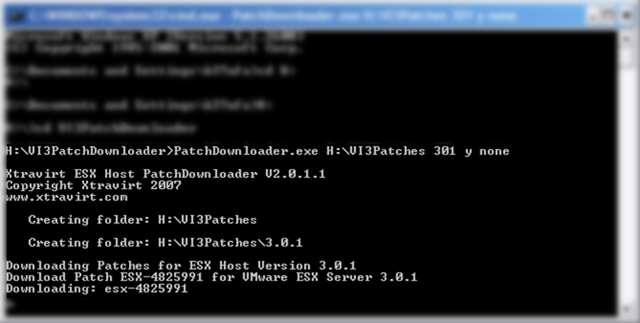
De tool in actie:

VI3Patchdownloader2

Download de tool hier: http://www.xtravirt.com/

VMware: Scripted installations


Ik ben de laatste tijd nogal bezig met het maken van een scripted installation voor VI3 (ESX 3.0.1). Ik maak hiervoor gebruik van UDA 1.4 welke je hier kunt downloaden: mirror 1: chaz6.com mirror 2: itservices.ne-worcs.ac.uk

Op de website van rtfm education vindt je meer informatie over uda: http://www.rtfm-ed.co.uk/.

Op http://www.vmware.com/community/ is nu een topic aan de gang over scripted installations. Hier vindt je vele handige scripts en add-ons voor je kickstart template.

happy scripting 😉

VMware: ESX 3.0.1 within a VM?


Tijdens het browsen op het vmtn forum kwam ik toevallig dit topic tegen: http://vmware.com/community/ waarin getest wordt met VMware Workstation 6 met een VM waar ESX 3.0.1 op wordt geïnstalleerd. Ik heb dit zelf even getest en het werkt! daar is echter ook alles mee gezegd want de performance is slecht maarja wat wil je het is toch leuk om te testen.

De VM configureren

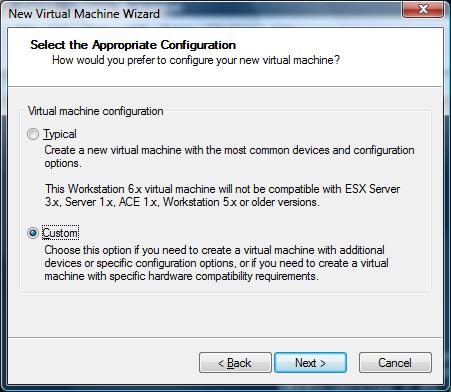
Start de new Virtual Machine Wizard en klik op Custom
esx301_vw6.jpg

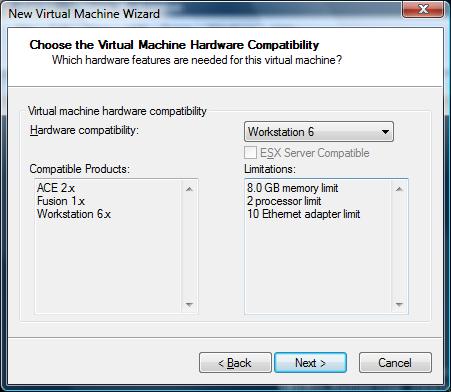
Kies voor Workstation 6 VM.

esx301_vw61.jpg

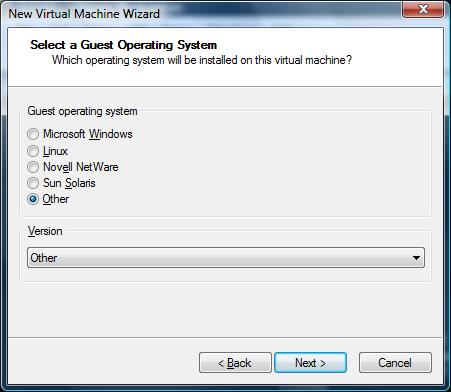
Kies Other als Guest Operation System

esx301_vw62.jpg

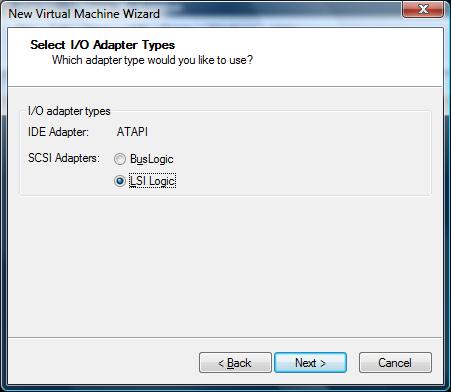
De SCSI Adapter wordt een LSI Logic.

esx301_vw64.jpg

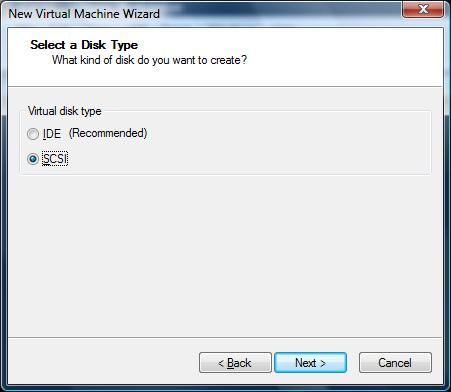
En dan een SCSI hardisk.

esx301_vw65.jpg

Nadat je VM klaar is sluit je VMware Workstation af. Open daarna het VMX bestand in je favoriete editor en voeg de volgende parameters toe:

ethernet0.virtualDev = “e1000”
monitor_control.restrict_backdoor = TRUE
monitor_control.vt32 = TRUE

De monitor_control.vt32 = TRUE werkt alleen als je Intel VT op je processor hebt.

ESX 3.0.1 installeren

Daarna kun je ESX 3.0.1. installeren.

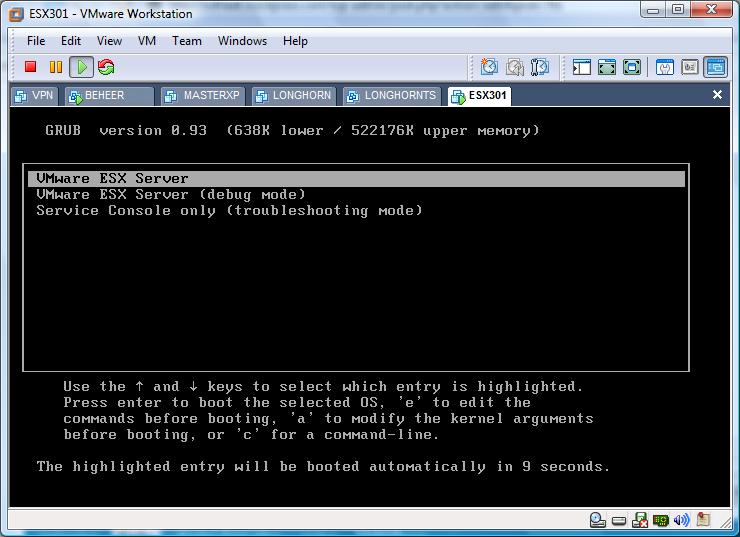
Na de installatie wordt ESX 3.0.1 opgestart

esx.jpg

Virtuele ESX Server in VirtualCenter 2

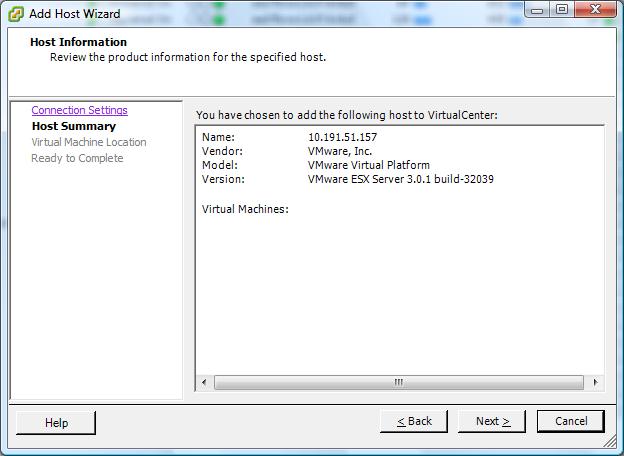
In de onderstaande printscreen zie je de Virtuele ESX server in VC2

esx301_vw6_vc2.jpg

Xtravirt.com heeft een soortgelijk document gemaakt. Deze kun je hier downloaden: xtravirt.com